
Minimally Invasive Bunion Surgery in Idaho Falls
Small incisions. Less disruption. A faster return to the things you love.
If a bunion is making shoes painful, keeping you off the trail, or simply getting worse every year, you may have heard that bunion surgery means a big incision, plates and screws, and months on the couch. It doesn’t have to.
At Motion Focused Podiatry, Dr. Tom Lyman corrects bunions using minimal incision techniques, the same techniques he teaches to other foot and ankle surgeons. The goal is simple: fix the deformity and get you moving again as quickly and safely as possible.
What is a bunion?
A bunion (hallux valgus) is not just a bump on the side of the foot. It’s a structural problem: the first metatarsal bone drifts outward while the big toe angles in toward the other toes. The “bump” is the end of that displaced bone.
Because it’s a bone alignment problem, bunions usually get worse over time. Wider shoes, pads, and orthotics can ease symptoms, but they cannot straighten the bone. Common signs include:
- A visible bump at the base of the big toe that rubs in shoes.
- Pain, redness, or swelling over the joint, especially after activity.
- A big toe that crowds or overlaps the second toe, sometimes leading to hammertoes.
- Stiffness or aching that limits walking, running, or hiking.

When is it time to consider surgery?
Not every bunion needs surgery. We always start by discussing non-surgical options. Surgery is worth considering when:
- Pain limits your daily life or the activities you enjoy.
- You’ve tried wider shoes, pads, or orthotics and still hurt.
- The deformity is progressing or causing problems with other toes.
There’s no need to wait until a bunion becomes severe. Many patients find that correcting it earlier makes for a more straightforward procedure.
How minimally invasive bunion surgery is different
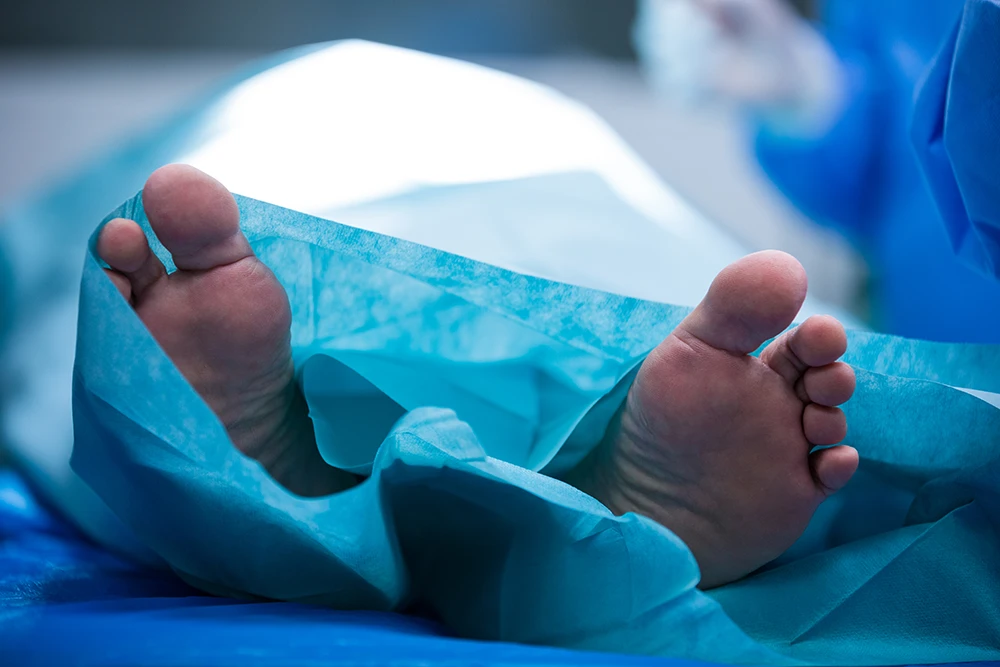
Traditional bunion surgery uses a long incision along the side of the foot to reach and cut the bone. Minimal incision surgery corrects the same deformity through a few very small incisions, using specialized instruments and real-time imaging (fluoroscopy) to guide the correction.
What that can mean for you:
- Smaller incisions and smaller scars.
- Less disruption to the soft tissue around the joint.
- No plates or screws with Dr. Lyman’s technique, so there’s no hardware to irritate or remove later.
- Performed under local anesthesia, without the need for general anesthesia.
- Walking sooner in a protective post-operative shoe.
Every foot is different. During your consultation, Dr. Lyman will explain whether you’re a good candidate and what to expect for your specific bunion.
The Rapid Return Protocol
Surgery is only half the story. Recovery is where most patients feel the difference.
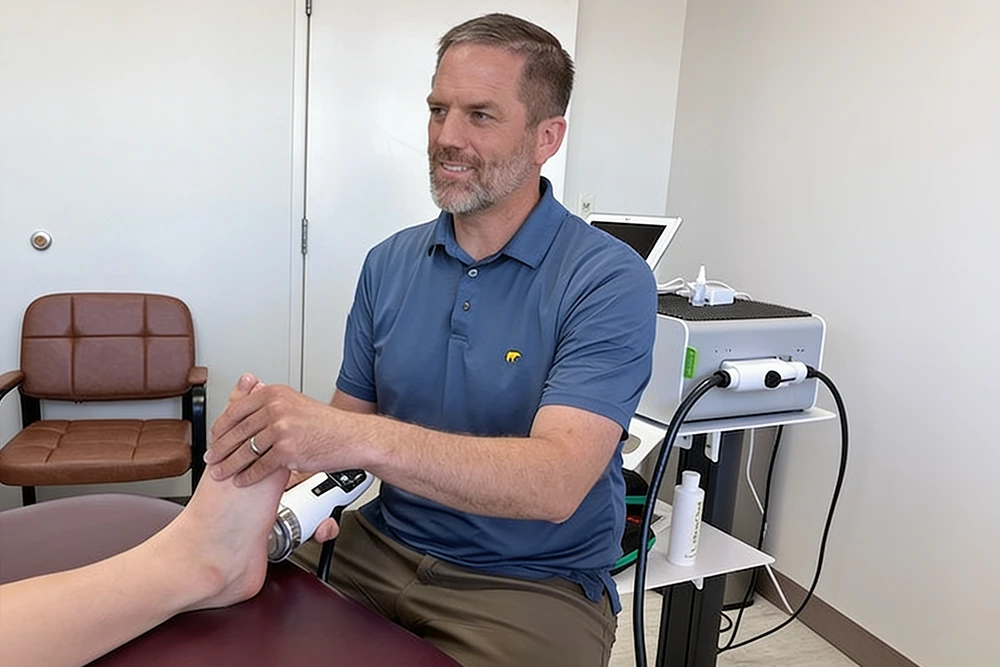
Every bunion surgery package at Motion Focused Podiatry includes our Rapid Return Protocol, a recovery plan built around our movement-is-medicine philosophy. It combines post-operative therapies used in our office, such as MLS laser therapy and focused shockwave, with a structured plan to get you back to normal activity as safely and quickly as your healing allows.
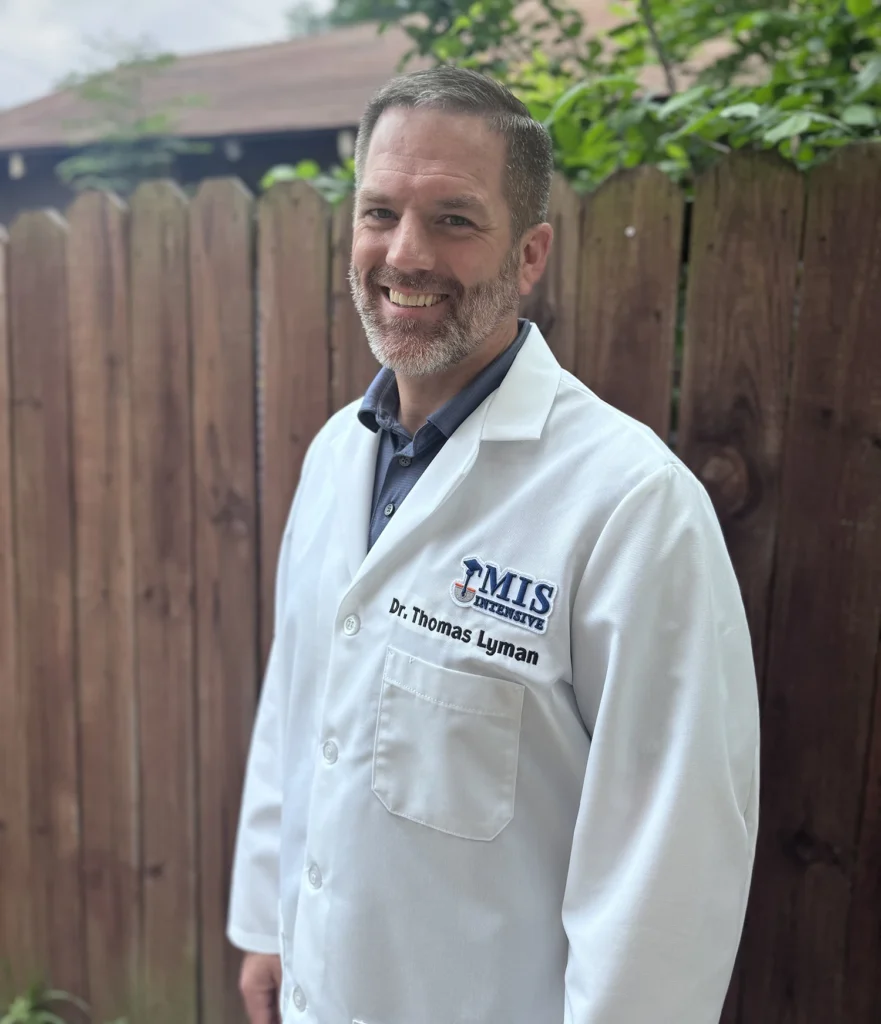
Meet Dr. Tom Lyman, DPM
Dr. Lyman is the founder of Motion Focused Podiatry and is Board Certified in Foot and Ankle Surgery. He completed a surgical residency, holds a Master’s degree in human kinesiology, and brings over 15 years of clinical experience to every patient.
He also serves as an instructor in Chicago, teaching minimal incision foot and ankle surgery techniques to other surgeons. When you choose Dr. Lyman, you’re working with a surgeon who trains others in the procedure.
Clear, upfront surgical pricing
As a direct-pay practice, we quote your surgery as a package, so you know the cost before you commit. No surprise facility bills, no insurance pre-authorization delays.
Bunion Consultation
FREE
Your Written Quote
After your consultation, you’ll receive an itemized package price with no pressure to decide that day.
Ask about payment plan options. Many patients also use HSA or FSA funds.
Frequently asked questions
Is minimally invasive bunion surgery right for everyone?
No. Most mild to moderate bunions, and many more advanced ones, can be corrected this way, but the right procedure depends on your X-rays, joint health, and goals. Dr. Lyman will tell you honestly whether it's a good fit.
Will I be put to sleep?
Dr. Lyman performs minimal incision bunion correction under local anesthesia, so general anesthesia isn't needed. Some prefer to be asleep and for those the surgery is performed in a local surgery center.
How soon can I walk after bunion surgery?
Most patients walk in a protective surgical boot immediately after the surgery. Your exact timeline for returning to regular shoes, work, and exercise depends on your correction and healing, and we'll map it out with you before surgery.
Will my bunion come back?
Correcting the bone alignment, rather than just shaving the bump, addresses the underlying cause and lowers the chance of recurrence. No surgery can promise a bunion will never return, but a proper correction gives you the best odds.
Are there plates or screws?
Not with Dr. Lyman's technique. The bone is corrected without implanted hardware.
Can bunions be fixed without surgery?
Non-surgical care like wider shoes, padding, and orthotics can relieve symptoms, but only surgery can realign the bone.
Do you take insurance?
We are a direct-pay practice and don't bill insurance directly. Our package pricing means you know your total cost upfront, and we can provide documentation for possible out-of-network reimbursement.
Ready to stop working around your bunion?
Schedule a bunion consultation with Dr. Lyman in Idaho Falls. You’ll get a clear diagnosis, an honest answer about whether minimally invasive surgery is right for you, and a price you know upfront.
Motion Focused Podiatry · 2375 E Sunnyside Rd, Suite I, Idaho Falls, ID 83404